
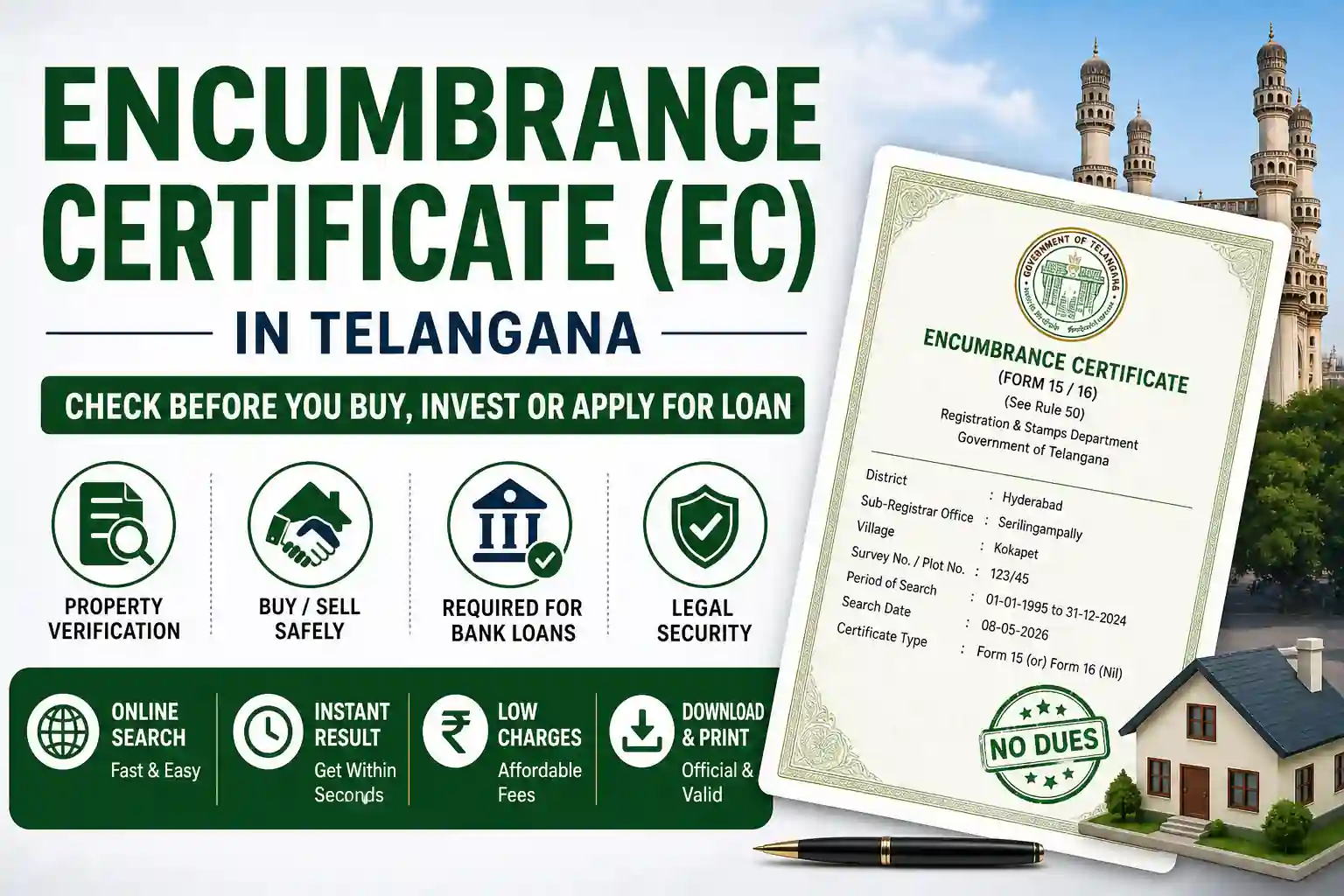
The Encumbrance Certificate (EC) is one of the most important documents in property transactions in Telangana. Whether you are buying land, selling property, or applying for a loan, the EC acts as proof that the property is free from legal or financial liabilities.
Encumbrance Certificate (EC) in Telangana is a legal document that shows whether a property has any financial or legal liabilities such as loans, mortgages, or disputes.
In this article, you will learn everything about the Encumbrance Certificate (EC) in Telangana, including its meaning, importance, required documents, application process, fees, and how to download it online.
What is an Encumbrance Certificate (EC)?
An Encumbrance Certificate is an official document issued by the Registration Department that shows the legal and financial transactions related to a property for a specific period.
It confirms whether the property:
- Has any loans or mortgages
- Has been sold or transferred
- Is free from legal disputes
A Nil Encumbrance Certificate (EC) is issued when no transactions are recorded for the property.
Why is EC Important?
The Encumbrance Certificate (EC) is essential for
- Property buying and selling
- Applying for home loans
- Verifying ownership history
- Avoiding fraud or disputed properties
- Property mutation and registration
Without an EC, you cannot ensure that the property is legally safe.
Types of Encumbrance Certificate
1. Form 15
- Issued when the property has registered transactions like sale, gift, mortgage, etc.
2. Form 16 (Nil EC)
- Issued when no transactions are found during the selected period.
Details Mentioned in EC
The Encumbrance Certificate (EC) includes
- Property owner name
- Property description
- Survey number / plot details
- Transaction details (sale, gift, mortgage)
- Registration number and date
- Executants and claimants
How to Apply for Encumbrance Certificate (EC) in Telangana (Online Method)
Telangana provides an easy online method through the official portal. Following is the Step-by-Step Process:
- Visit the official website of Registration & Stamps Department Telangana: registration.telangana.gov.in
- Click on “Encumbrance Search (EC)”
- Select Document Number or Property Details
- Enter required details that is District, SRO (Sub-Registrar Office), Survey number / Document number and Choose the period (years)
- Enter captcha and submit
- View EC details instantly
- Download or print the certificate
How to Apply for EC Offline
You can also apply offline by visiting the nearest Sub-Registrar Office. Following is the Step-by-Step Process:
- Visit your local SRO
- Fill the EC application form
- Submit property details
- Pay the required fee
- Collect EC after processing
Documents Required for EC
- Property details (Survey No / Plot No)
- Sale deed copy (if available)
- Applicant ID proof
- Registration details (optional for search)
Encumbrance Certificate (EC) Charges in Telangana
The fee depends on the number of years requested:
| Up to 30 years | Approx. ₹200 to ₹500 |
| Additional years | Extra charges apply |
Online search is usually free, but certified copies may have a fee.
Processing Time
| Online EC | Instant |
| Offline EC | 2 to 5 working days |
How to Get Encumbrance Certificate (EC) in Telangana
- Use the online EC search to save time instead of visiting offices
- Keep property details ready (Survey No / Plot No / Document No) before starting
- Always select correct SRO (Sub-Registrar Office) to avoid wrong results
- Check EC for at least 20–30 years to ensure property safety
- Prefer search by document number for more accurate results
- Double-check owner name, dates, and transaction details carefully
- Download EC instantly and keep a soft copy and print copy
- Visit SRO only if you need a certified (official stamped) EC
- Apply during working hours (morning time) if going offline to avoid delays
- Keep ID proof handy for offline applications
- Verify EC along with sale deed and other documents for full clarity
- Recheck EC before finalizing any property deal or loan process
Why is EC Used?
- Buying land or house
- Selling property
- Applying for bank loans
- Legal verification
- Property mutation
Mistakes to Avoid While Checking Encumbrance Certificate (EC)
- Checking EC for a short period only: Many people check for just 5–10 years. Always verify at least 20–30 years to ensure full property history.
- Entering incorrect property details: Even a small mistake in survey number, document number, or SRO can show wrong or incomplete results.
- Ignoring name variations: Owner names may have spelling differences. Don’t assume it’s a different person without verifying carefully.
- Not verifying transaction types: Look closely for entries like mortgage, loan, lease, or court attachment these indicate liabilities.
- Assuming Nil EC means completely safe: A Nil EC only means no registered transactions. Some issues (like unregistered agreements) may not appear.
- Not cross-checking with Sale Deed: EC should match with the sale deed details. Any mismatch must be clarified before proceeding.
- Skipping manual verification for old properties: Very old records may not be fully digitized. Visit the SRO if property history is long or unclear.
- Not checking latest updates: Always take the most recent EC before finalizing a deal to avoid last-minute risks.
- Relying only on online copy for legal use: Online EC is useful, but banks or legal processes may require a certified EC from SRO.
- Overlooking joint ownership details: Make sure all owners or parties involved are clearly listed in the EC.
- Never rely on EC alone: Always verify other property documents, approvals, and tax receipts before buying.
Documents to Check Along with Encumbrance Certificate (EC)
- Sale Deed: Confirms ownership; ensure details match EC
- Title Deed / Mother Deed: Verifies complete ownership history without gaps
- Property Tax Receipts: Ensures all taxes are paid and no dues pending
- Approved Layout Plan: Confirms property is in a legally approved layout
- Building Approval: Ensures construction is authorized by authorities
- Occupancy Certificate (OC): Certifies building is safe for living
- Utility Bills: Helps verify ownership and check pending dues
- Loan Clearance / NOC: Confirms any previous loan is fully cleared
- Pattadar Passbook / Land Records: Validates land ownership (important for agricultural land)
- Seller Identity Proof: Ensures the seller is genuine and authorized
Difference Between Encumbrance Certificate (EC) and Sale Deed
Many people confuse the Encumbrance Certificate with the Sale Deed, but both serve completely different purposes in property transactions.
| Aspect | Encumbrance Certificate (EC) | Sale Deed |
| Purpose | Shows whether a property has any loans, mortgages, or legal liabilities | Confirms the transfer of ownership from seller to buyer |
| Legal Importance | Used for verification of property history | Primary legal proof of ownership |
| Issued By | Issued by the Registration Department | Executed between buyer and seller and registered at Sub-Registrar Office |
| Content | Contains transaction history (sale, gift, mortgage, etc.) | Contains ownership details, buyer/seller info, and property description |
| When Required | Needed while buying property or applying for a loan | Required at the time of property purchase |
| Nature of Document | Supporting document for verification | Legal ownership document |
- Sale Deed = Proof of Ownership
- Encumbrance Certificate (EC) = Proof of No Liabilities
- Both documents are equally important. A property may have a valid Sale Deed but still carry hidden loans or legal issues, which can only be identified through the EC.
- Always verify both before buying any property.
The Encumbrance Certificate (EC) is a crucial document that ensures a property is legally safe and free from financial obligations. Thanks to digital services in Telangana, checking and downloading EC has become quick and simple.
Before investing in any property, always verify the EC to avoid future risks.
Online Property Services Related to EC in Telangana
Apart from checking the Encumbrance Certificate (EC), the Telangana Registration portal provides several online services that help in property verification and legal checks.
EC Telangana Online Search by Name
You can search the Encumbrance Certificate using the owner’s name if you do not have document number or survey details.
- To search by Name visit the official portal registration.telangana.gov.in
- Login with your credentials
- Select user type as citizen
- Enter registered mobile number/ Email ID
- Enter Password and captcha and Login
Download Encumbrance Certificate Telangana
After searching Encumbrance Certificate (EC) online, you can download and print the certificate instantly for reference. For legal purposes, a certified copy may be required.
- Visit the official portal registration.telangana.gov.in
- Click on “Certified Copy of Document”
- Select district
- Enter SRO, Year and Document Number
- Click on Get Details
- Print/Download The Encumbrance Certificate
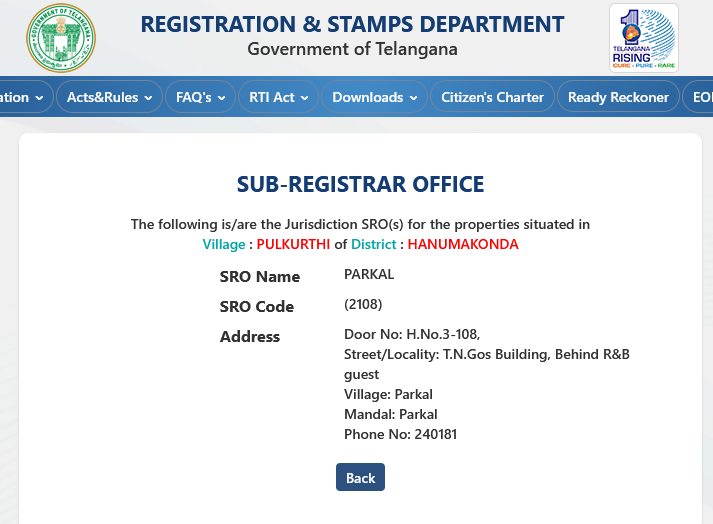
Know Your SRO (Sub-Registrar Office)
This option helps you find the correct Sub-Registrar Office (SRO) based on your property location, which is important for accurate EC search and registration.
- To know your SRO visit the official portal registration.telangana.gov.in
- Click on Village Directory
- Select District, Mandal and village
- Click on Get details
- The details of SRO Name, SRO Code and Address will be available
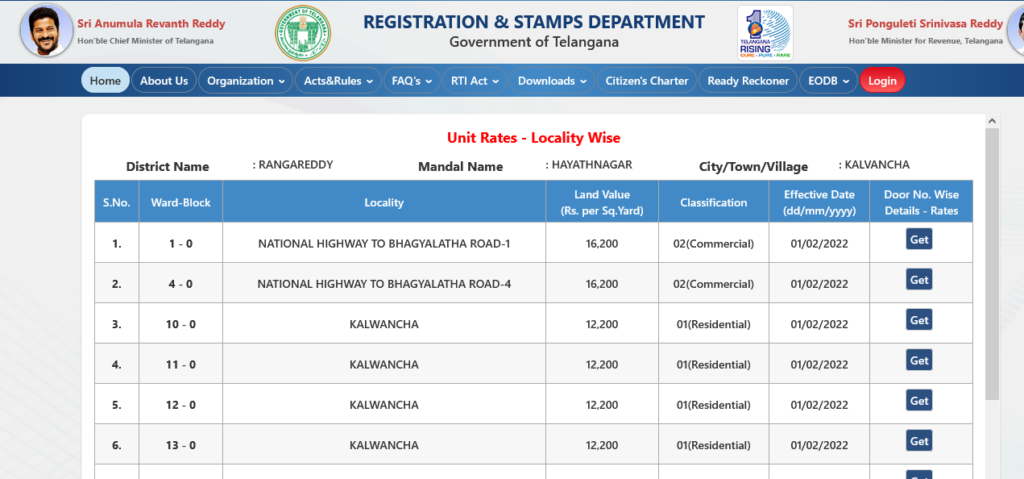
Market Value Search
You can check the government-approved property value in your area. This helps in calculating registration charges and avoiding overpayment.
- Visit the official portal registration.telangana.gov.in
- You can select search by Land value or Apartment Value
- Select District, Mandal and Village
- Click on submit button
- Locality Wise details will be available
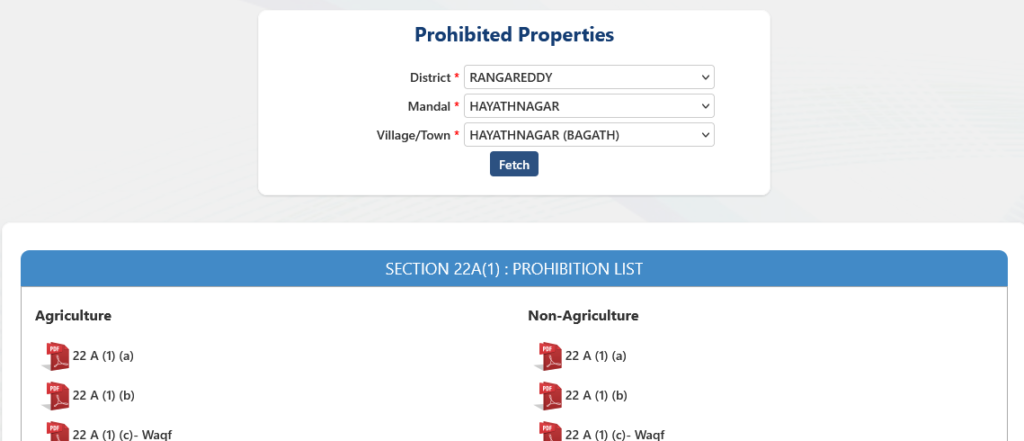
Prohibited Properties Check
This feature allows you to verify whether a property is in the prohibited list, meaning it cannot be registered due to legal or government restrictions.
- Visit the official portal registration.telangana.gov.in
- Select District, Mandal and Village/Town
- Click on Fetch button
- The Prohibition List of Agriculture and Non-Agriculture Properties in pdf format are available to download.
Frequently Asked Questions (FAQs)
1. Is EC mandatory for property purchase?
Yes, EC is essential to verify that the property is free from liabilities.
2. Can I get EC online in Telangana?
Yes, you can download it online from the Registration Department website.
3. What is Nil Encumbrance Certificate?
It means no transactions or liabilities are recorded for the selected period.
4. How many years EC should be checked?
At least 20–30 years is recommended.
5. Is online EC valid?
Yes, it is valid for reference. Certified EC may be required for legal purposes.
6. How Many Years EC is Required in Telangana?
Minimum 20 to 30 years EC is recommended to verify complete ownership history and ensure the property has no past legal or financial issues.
Also Read:
How to Apply for Caste Certificate
How to Apply for Income Certificate
Telangana Endowments Executive Officer Grade 1, 2 & 3 Recruitment 2026